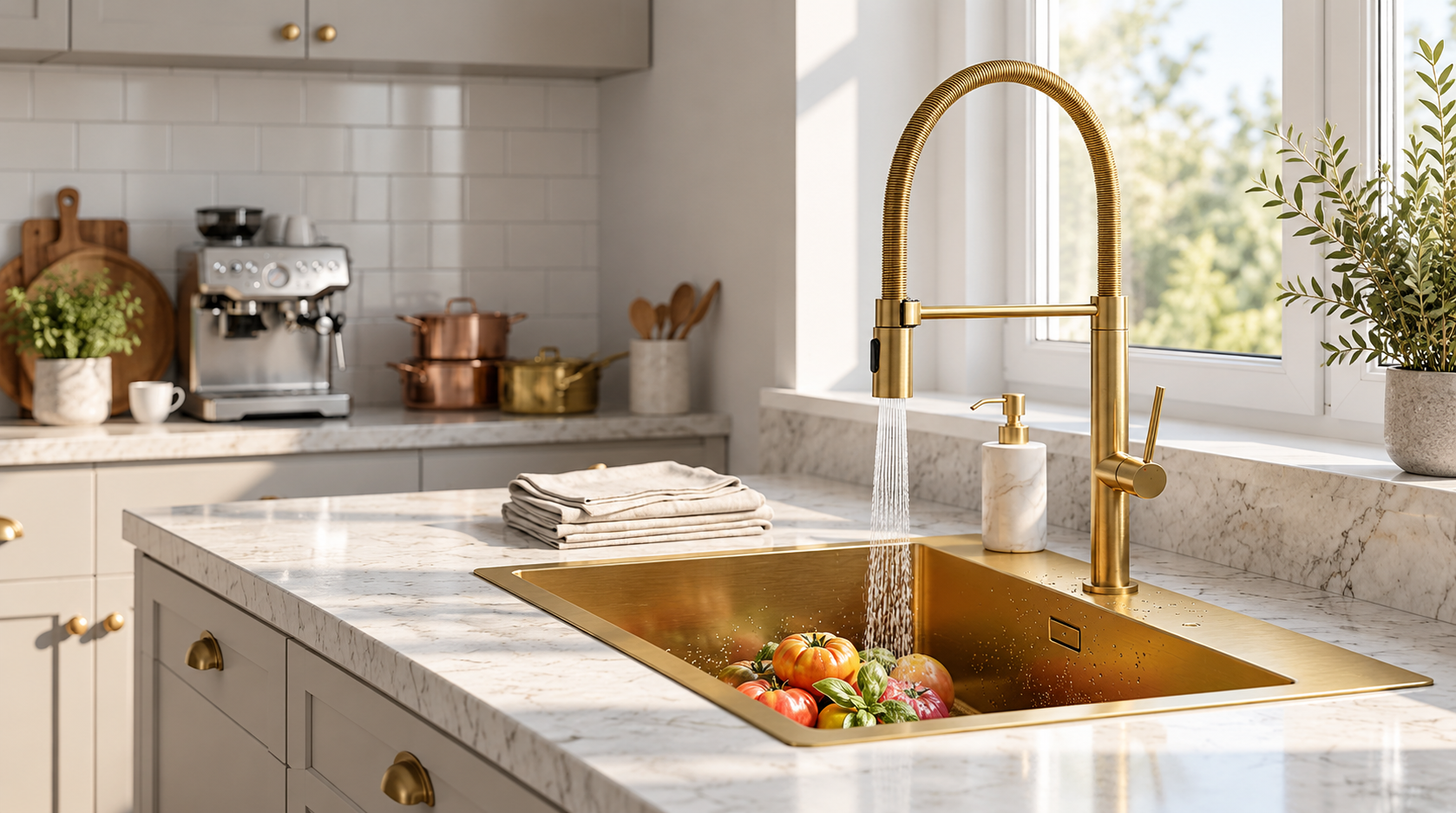
Measure the diameter of the existing hole in your sink or counter before ordering a new tap. Most single-hole mixer taps are built for a standard 33-35mm hole, but older sinks, particularly ceramic or cast iron ones, sometimes have wider holes, up to 38mm or more, and some taps come with an adaptor specifically to bridge that gap. If the hole is smaller than the tap's base, drilling a larger hole in a hard material like ceramic or granite composite isn't something to attempt without the right tools, and if the hole is larger than the tap's base, a cover plate or base adaptor usually solves it without replacing the sink.
Why Tap Hole Size Causes More Returns Than Almost Any Other Spec
A tap's spout height, finish, and handle style are all visible in a product photo, and it's easy to choose based on those alone. Hole diameter isn't visible in a photo at all, it's a hidden compatibility spec that only becomes obvious once the tap arrives and doesn't sit flush, or won't fit through the hole at all.
This matters specifically because a tap's base has a fixed diameter it needs to pass through and seat against, and that base size is not universal across brands or eras. A tap bought to replace one that's ten or more years old is one of the most common situations where the new tap's base doesn't match the existing hole, since manufacturing standards have shifted over time and vary between manufacturers even within a similar period.
Standard Tap Hole Sizes
33-35mm is the current standard for most single-hole mixer taps sold today, across kitchen and bathroom fittings. If your existing hole falls in this range, most modern single-hole taps will fit directly without an adaptor.
36-38mm holes appear in some older sinks, particularly vintage ceramic, fireclay, or cast iron sinks manufactured before the 33-35mm standard became widespread. A modern tap with a 33-35mm base will sit loosely in a hole this size unless a base adaptor or cover plate is used to close the gap.
Under 33mm holes are less common but do occur in some older or non-standard fittings. A tap base larger than the hole simply won't fit through at all, which means either drilling the hole larger (a job for a professional, especially in granite, composite, or fireclay) or choosing a tap specifically built for a smaller hole diameter.
Multi-hole configurations (three-hole or widespread sets, where the spout and handles mount separately) have their own spacing measurement, typically 152mm (6 inches) or 203mm (8 inches) center to center, which matters as much as the individual hole diameters. This is a completely different measurement from a single-hole tap's base diameter and needs checking separately if the existing sink or counter has multiple pre-drilled holes.
How to Measure Your Existing Hole Correctly
- Remove the old tap first, if one is currently installed, so the hole itself is fully visible and measurable, rather than estimating around an existing fitting.
- Measure straight across the hole's diameter at its narrowest point, using a tape measure or calipers if available. Some holes have a slight bevel or countersink at the top, so measure at the hole's main, consistent diameter rather than at the very top edge.
- For a multi-hole setup, measure center to center between the hole centers, not edge to edge, since that's the spacing figure manufacturers list for widespread and three-hole tap sets.
- Check the material and thickness of the counter or sink deck, since this affects how the tap's mounting hardware, typically a nut and washer underneath, needs to seat and tighten, separate from the hole diameter itself.
What to Do If the Sizes Don't Match
New tap base smaller than the existing hole:
This is the more common and easier mismatch to solve. A base adaptor or cover plate, sold separately or sometimes included with the tap, sits over the existing hole and gives the smaller tap base a properly sized, flush seat to mount into. This is a straightforward fix that doesn't require any drilling or hole modification.
New tap base larger than the existing hole:
This requires enlarging the hole, which is a job for a professional in almost every case, particularly in ceramic, fireclay, granite composite, or natural stone, where an incorrect drilling attempt can crack or chip the material irreversibly. If enlarging the hole isn't practical or desirable, the alternative is choosing a different tap model with a base diameter that matches the existing hole rather than modifying the sink or counter.
Multi-hole spacing doesn't match the new tap's configuration:
If the existing holes are spaced for an 8-inch widespread set and the new tap is designed for 6-inch spacing, or vice versa, the mismatch generally can't be solved with an adaptor the way single-hole diameter can. This typically means either choosing a tap built for the existing spacing or, for a full renovation, having the counter or sink redrilled or replaced.
Quick Reference
|
Situation |
Typical fix |
Professional needed? |
|
Existing hole 33-35mm, new tap base 33-35mm |
Direct fit, no adaptor needed |
No |
|
Existing hole 36-38mm, new tap base 33-35mm |
Base adaptor or cover plate |
Usually no, straightforward DIY fit |
|
Existing hole under 33mm, new tap base 33-35mm+ |
Choose a smaller-base tap, or drill the hole larger |
Yes, if drilling is required |
|
Multi-hole spacing mismatch (152mm vs 203mm) |
Choose a tap built for existing spacing, or redrill/replace counter |
Yes, for redrilling |
|
Uncertain existing hole size |
Measure before ordering, or request product spec confirmation |
No |



A Note on Drilling
Enlarging an existing tap hole, or drilling a new one, in ceramic, fireclay, granite composite, or natural stone is not a standard DIY job. These materials can crack, chip, or shatter under incorrect drilling pressure or with the wrong drill bit, and a cracked sink or counter is a considerably more expensive problem than the original mismatch. This work should go to a professional with experience drilling the specific material in question, using bits and techniques suited to that material.
Drilling into a laminate or solid-surface counter is more commonly done as a DIY task, but even there, confirming the correct bit size and drilling technique for the material first avoids an irreversible mistake on a counter that's expensive to replace.
Common Mistakes
- Ordering a tap based on style and finish alone without measuring the existing hole diameter first
- Assuming all single-hole taps use the same base size, when older sinks in particular can vary from the current standard
- Measuring hole diameter at a beveled or countersunk edge rather than the hole's actual consistent diameter
- Confusing single-hole base diameter with multi-hole center-to-center spacing, which are entirely different measurements solving different compatibility questions
- Attempting to enlarge a hole in ceramic, fireclay, or stone without professional experience, risking a cracked sink or counter
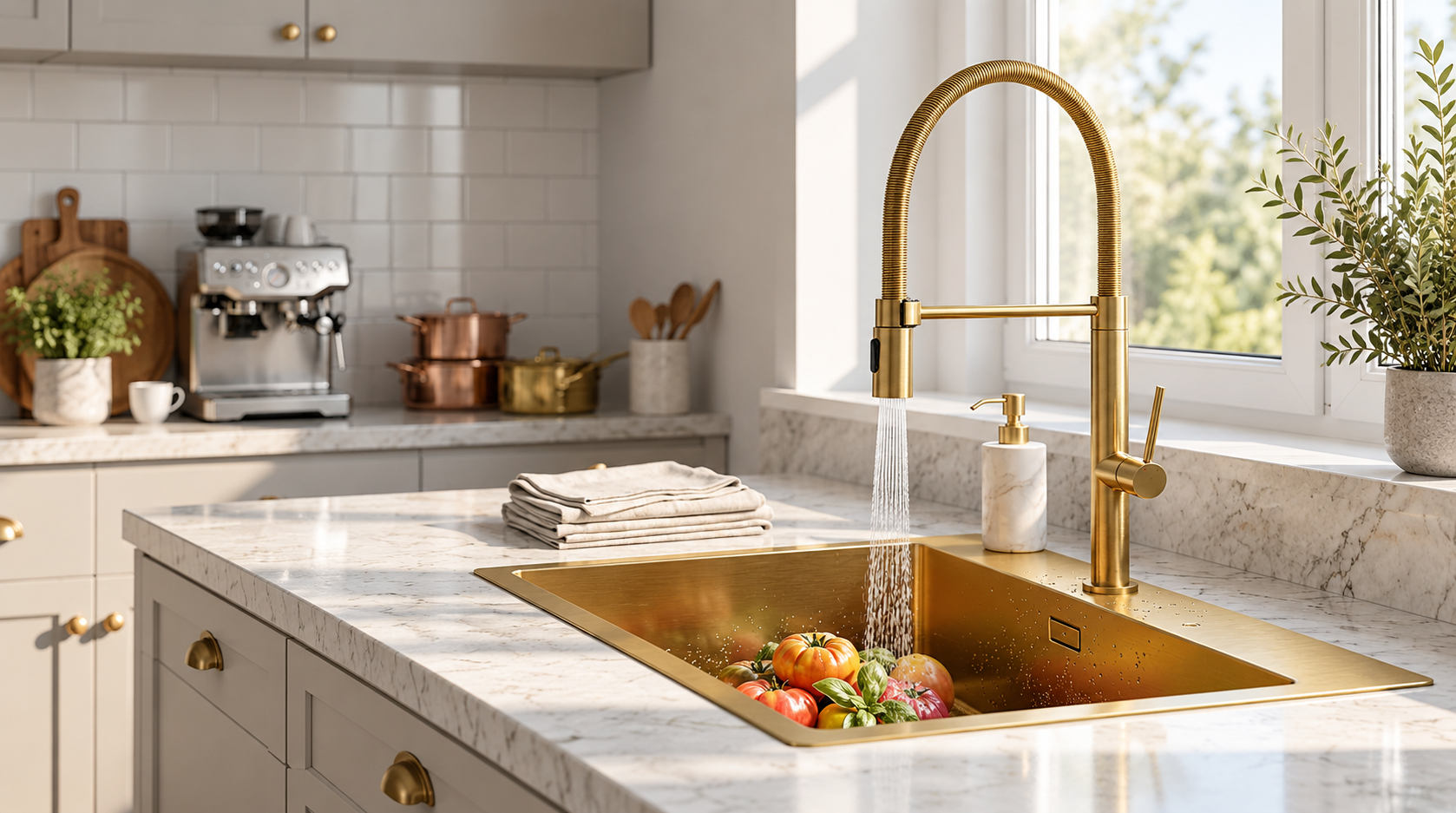
Measure the existing hole's diameter, and the spacing if it's a multi-hole setup, before ordering a new tap, not after it arrives. A smaller tap base than the hole is an easy fix with an adaptor; a larger tap base than the hole means either professional drilling or choosing a different tap model. Getting this measurement right before ordering avoids the most common and most avoidable tap-buying mistake.
FAQ
What's the standard tap hole diameter?
Most current single-hole mixer taps are built for a 33-35mm hole. Older sinks, particularly ceramic, fireclay, or cast iron ones, sometimes have wider holes, up to 38mm or more, which is why measuring the existing hole before ordering matters more with an older sink.
Can I use an adaptor if my tap hole is too big for the new tap?
Yes, this is the more common and easier mismatch to fix. A base adaptor or cover plate sits over the larger existing hole, giving the smaller tap base a flush, properly sized seat without any drilling required.
What if my new tap's base is bigger than my existing hole?
The hole needs to be enlarged, which should be done by a professional, especially in ceramic, fireclay, granite composite, or stone, where incorrect drilling can crack or chip the material. Alternatively, choosing a different tap model with a base that matches the existing hole avoids drilling entirely.
Is tap hole spacing the same as hole diameter?
No, they're different measurements. Hole diameter is the size of a single hole a tap's base passes through. Spacing applies to multi-hole setups (typically 152mm or 203mm center to center) and refers to the distance between separate holes for the spout and handles, which is a completely different compatibility question from single-hole diameter.
How do I measure my existing tap hole correctly?
Remove the old tap first so the hole is fully visible, then measure straight across the hole's diameter at its main, consistent width rather than at a beveled top edge. For multi-hole setups, measure center to center between hole centers rather than edge to edge.
Can I drill a new tap hole myself?
It's not recommended for ceramic, fireclay, granite composite, or natural stone, since incorrect drilling can crack or chip these materials irreversibly. This work is best left to a professional experienced with the specific material. Drilling into laminate or solid-surface counters is more commonly a DIY task, but confirming the correct bit and technique first still matters.


